Prequire scanning identifies accessibility barriers that expose businesses to ADA lawsuits and simultaneously fixes the structural gaps that prevent AI engines like ChatGPT and Perplexity from citing your content.
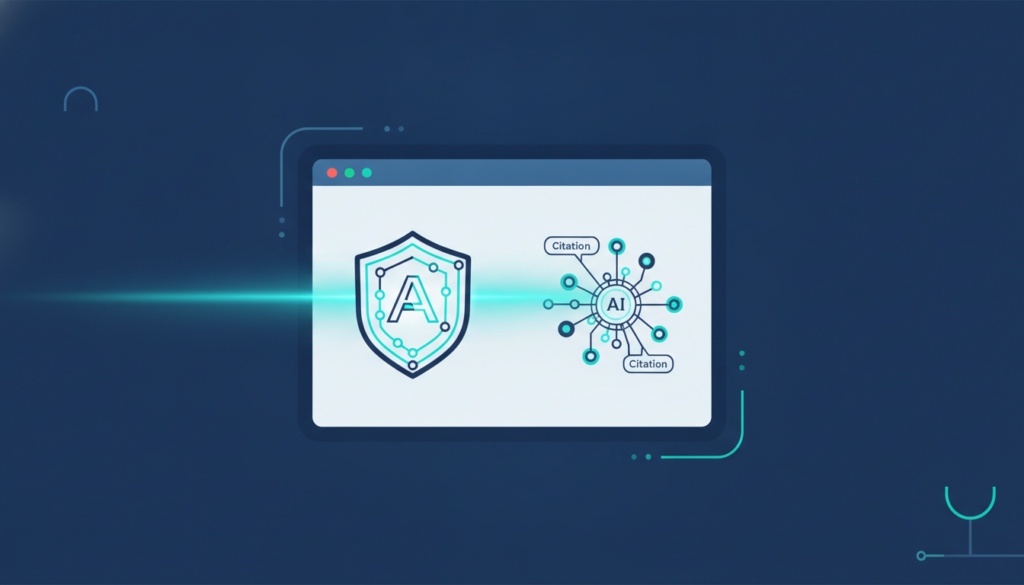
How Prequire Scanning Prevents ADA Legal Risk While Boosting AEO
Most businesses discover their ADA compliance problem the same way they discover a roof leak — when it's already raining lawyers. I built Prequire specifically so that doesn't happen to you. The bonus nobody talks about: the same fixes that close your legal exposure are the exact signals that make AI answer engines trust your content enough to cite it.
How Prequire Scanning Prevents ADA Legal Risk While Boosting AEO
Prequire scanning identifies accessibility barriers that expose businesses to ADA lawsuits and simultaneously fixes the structural gaps that prevent AI engines like ChatGPT and Perplexity from citing your content.
Most businesses discover their ADA compliance problem the same way they discover a roof leak — when it’s already raining lawyers. I built Prequire specifically so that doesn’t happen to you. The bonus nobody talks about: the same fixes that close your legal exposure are the exact signals that make AI answer engines trust your content enough to cite it.
ADA Gaps and AEO Gaps Are the Same Problem Wearing Different Hats
Accessibility barriers and AI-invisibility failures share a common root cause: your content isn’t structured in a way that machines can reliably parse and act on. When a screen reader can’t navigate your page, neither can a large language model trying to extract a citable answer. Both failure modes stem from missing semantic structure — unlabeled images, broken heading hierarchies, ambiguous link text, and content buried inside JavaScript that neither assistive technology nor AI crawlers can reach.
I’ve been building for the web since 1998, and the thing that still surprises me is how often businesses treat accessibility and SEO as separate line items. They’re not. They’re the same investment. When I scan a site through Prequire, I’m checking for the structural signals that tell AI engines ‘this content is authoritative and retrievable’ — and those signals map almost perfectly onto WCAG compliance criteria. Fix one category, you advance in both.
The legal exposure side of this is not theoretical. ADA website lawsuits have been filed at a rate of over 4,000 per year in recent years, and serial plaintiffs use automated tools to identify targets. Those tools are looking for the same structural deficiencies my scanner flags. Getting to those issues first is the entire point.
| Reactive Approach | Prequire Proactive Scan |
|---|---|
| Lawsuit discovered after filing | Issues flagged before plaintiff tools find them |
| $25K–$90K legal defense cost | Fraction of lawsuit cost |
| ADA fix only, no AEO benefit | One fix improves both compliance and AI visibility |
| Content stays AI-invisible | Structural fixes increase answer-engine citation eligibility |
What a Prequire Scan Actually Catches — and Why It Matters Before a Lawsuit Does
A Prequire scan surfaces the accessibility and structure failures that create both legal liability and AI answer-eligibility problems in a single audit pass. I’m not running two separate checklists — the overlap is the methodology. Missing alt text is an ADA issue and an AEO issue. Poor heading structure creates a navigation barrier for screen reader users and an extraction barrier for AI models trying to identify your page’s topical authority. Form fields without labels violate WCAG 2.1 and confuse any machine trying to understand your content’s intent.
What I’ve found doing this work personally — no account managers, no handoffs, me doing the actual scan — is that most sites have a cluster of five to eight recurring issues that account for the majority of both their legal risk and their AI-invisibility. These aren’t obscure edge cases. They’re things like missing skip-navigation links, color contrast failures on call-to-action buttons, and PDF documents with no tagged structure. Each one is a plaintiff’s attorney’s checkbox and an AI engine’s dead end.
The Prequire scan produces a prioritized output you can act on immediately, with a measurable AEO score attached so you can see exactly where you started and track improvement over time. That score isn’t decorative — it’s the receipt that proves the work happened.
Proactive Audits Are Cheaper Than Reactive Legal Costs — and They Pay Forward Into AI Visibility
Defending a single ADA website lawsuit typically costs between $25,000 and $90,000 even when you win, and settlements average in the $35,000 range. A proactive Prequire audit costs a fraction of that — and unlike a legal settlement, it actually improves your business outcomes going forward. That’s the ROI case I make to every marketer and business leader I talk to: compliance spend that generates no return versus compliance spend that increases your content’s citation eligibility in AI-generated answers.
AI answer engines like ChatGPT, Perplexity, and Google’s AI Overviews are increasingly the first place buyers go for recommendations. If your content isn’t structured to be retrieved and cited — because the same structural failures that make it inaccessible also make it machine-unreadable — you’re invisible at the exact moment someone is deciding who to call. Fixing your ADA gaps isn’t just risk mitigation. It’s buying into the distribution channel that’s eating traditional search.
I only take a fixed number of builds and scans per quarter, and applicants go through a screening process, because this work deserves actual attention. If you’re reading this and wondering whether your site is exposed, the honest answer is: probably yes, and the scan will tell you exactly how much.
Compliance Signals Are Answer-Eligibility Signals — Here’s the Direct Connection
AI engines don’t have a separate ‘accessibility score’ they check — but they do weight content that is semantically clear, structurally navigable, and factually attributable. Those three criteria map directly to WCAG compliance. Content with proper heading hierarchy gives AI models a document outline they can use to identify topical depth. Alt text gives them visual context they can incorporate into answers. Logical reading order and labeled landmarks tell the model what part of your page is the authoritative answer versus boilerplate navigation.
When I publish atomic pages to pages.prequire.ai, I’m building them to pass both the Prequire accessibility scan and the AEO citation test simultaneously. My own site runs on exactly what I build for clients — there’s no gap between what I recommend and what I actually deploy. The Lighthouse scores, Rich Results tests, and Prequire scan results are all visible and attached to the work. That’s what ‘measurable’ looks like in practice.
The bottom line is that compliance signals and answer-eligibility signals are converging. Businesses that treat accessibility as a legal checkbox will keep paying for it twice — once in settlements, once in AI-invisibility. Businesses that treat it as a structural investment get the legal protection and the distribution advantage at the same time.
Frequently Asked Questions
What does Prequire scanning do to reduce ADA legal risk?
Prequire scanning identifies the accessibility failures — missing alt text, poor heading structure, unlabeled form fields — that ADA plaintiffs’ automated tools flag as targets. Catching these issues proactively through a Prequire audit costs far less than defending or settling a lawsuit, which typically runs $25,000 to $90,000.
How does fixing ADA compliance issues improve AI answer engine visibility?
Accessibility fixes and AEO fixes address the same root problem: content that machines can’t parse. Proper semantic structure, alt text, and logical heading hierarchy make pages readable for screen readers and retrievable for AI engines like ChatGPT and Perplexity. Fixing one category advances both simultaneously.
What specific issues does a Prequire scan flag that affect both ADA compliance and AEO?
A Prequire scan flags missing alt text, broken heading hierarchies, unlabeled form fields, poor color contrast, missing skip-navigation links, and untagged PDF documents. Every one of these is a WCAG violation and an AI-extraction barrier — the overlap is the methodology, not a coincidence.
Is a proactive accessibility audit actually worth the cost compared to just handling lawsuits reactively?
Yes. ADA website lawsuit settlements average around $35,000, and defense costs run $25,000 to $90,000 even when you win. A proactive Prequire audit costs a fraction of that and generates measurable improvements in AI citation eligibility — it’s compliance spend that pays forward into business outcomes.
How does Prequire measure AEO improvement after fixing accessibility issues?
Every Prequire scan produces a measurable AEO score so you can see your baseline and track improvement over time. Supporting measurements include Lighthouse scores and Rich Results test outputs. The score is attached to the work as a verifiable receipt — not a subjective assessment.